How to Choose a WaterFed Cart: DI vs. RO/DI
Updated September 9, 2026. By abc Window Cleaning Supply.
Choose a WaterFed cart by checking your source-water TDS, workload, available water pressure and transport needs. DI-only systems use deionization resin. RO/DI systems add membrane filtration before the final DI stage. Compare current equipment and replacement-filter costs for your actual work before choosing.
abc Window Cleaning Supply sells professional window cleaning equipment, including WaterFed systems, poles, filters and replacement parts. New to pure water cleaning? Start with our WaterFed cleaning introduction.
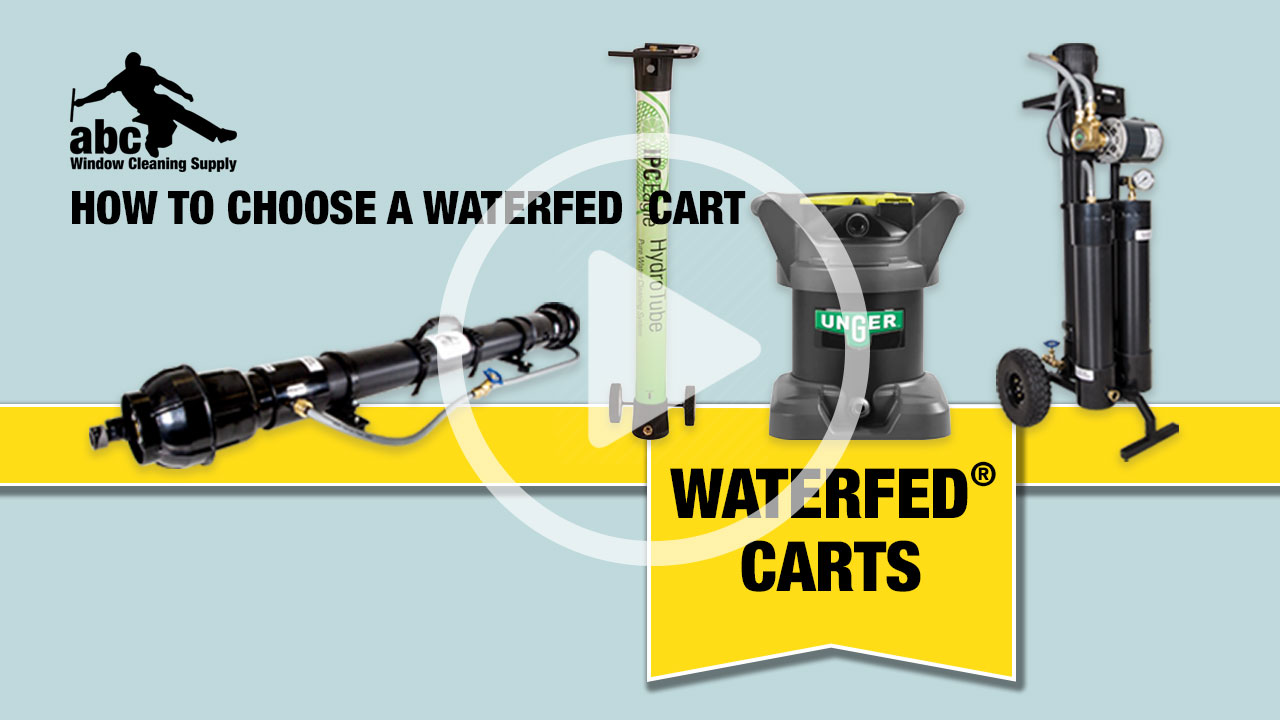
What should you measure before choosing?
- Source-water TDS: measure the water at your jobs in parts per million (ppm) and record the date.
- Workload: estimate water-on hours per week and working weeks per year. Keep travel and setup time separate.
- Pressure and flow: check the chosen model's requirements and record your hose length, diameter and number of poles.
- Transport: measure vehicle space and consider lifting, steps and rough ground.
- Ownership cost: compare dated quotes for equipment, accessories, consumables and maintenance using the same workload.
DI-only or RO/DI: what is the difference?
DI resin removes dissolved ions from water. In an RO/DI system, a membrane reduces the mineral load before final DI treatment. Higher feed-water TDS can use DI resin more quickly, making replacement costs an important comparison. See Unger's explanation of RO and DI technology.
| Compare | DI-only | RO/DI |
|---|---|---|
| Filtration | Deionization resin. | Membrane filtration followed by DI treatment; other stages depend on the model. |
| Costs to request | Equipment and resin replacements. | Equipment, prefilters, membrane and DI replacements; pump costs where applicable. |
| Questions for the supplier | How much usable output is expected at my measured TDS and flow? | What pressure, temperature, concentrate discharge and maintenance does this model require? |
Request a comparison for your conditions. A single hours-per-week cutoff cannot account for differences in source water, equipment prices and consumable costs.
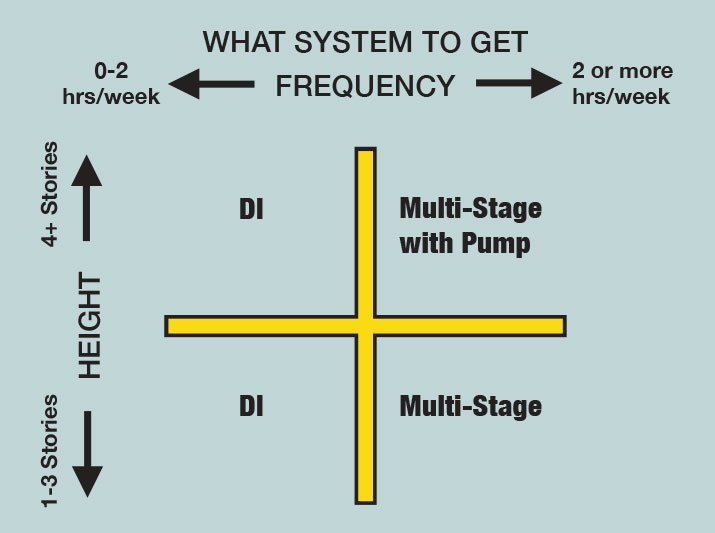
DI-only filtration illustration
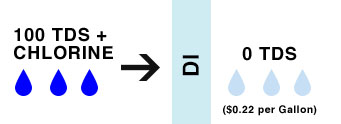
Multi-filtration illustration

These illustrations show filtration concepts. Use the selected model's manual for its configuration and operating limits.
Do you need a pump?
Check more than building height. The Phaser operation and maintenance manual identifies source pressure, cold water, hoses, blockages and leaks as factors affecting output. Confirm the flow needed at the brush and ask about a compatible pump within the selected system's pressure limits.

Compare equipment, transport and support
Shortlist specific models from our WaterFed carts and pure water systems. Include the exact configuration, required accessories, dimensions, warranty information and consumable part numbers in your comparison.
The Triple Crown Phaser is one RO/DI option. Its product page includes operating instructions, filters and replacement parts. Confirm compatibility before assuming a pump, filter or hose will fit.
What should you check before the first job?
Read the selected system's operating and maintenance instructions, check output-water quality, practice cleaning and rinsing, and inspect the glass after drying. The Phaser manual discusses spotting from old soap residue even when TDS is low. A TDS reading does not replace checking the finished result.
See our filter maintenance guide and the model-specific manual.
Historical WaterFed cost calculator
Historical illustration: October 2017 equipment prices and statewide TDS assumptions. These results are not current quotes or guaranteed savings. Measure your actual source water and compare current equipment and filter costs before buying. Read the assumptions and calculation method.
- DI Only Cost
Loading... - Multi-Filter Cost
Loading... - Multi-Filter will save
you Loading... - Buying Multi-Filter instead
of DI will pay off in Loading...
Get help comparing WaterFed systems
Call abc Window Cleaning Supply at 800-989-4003 with your water readings, workload estimate and shortlisted models. Ask for current pricing and configuration-specific advice.