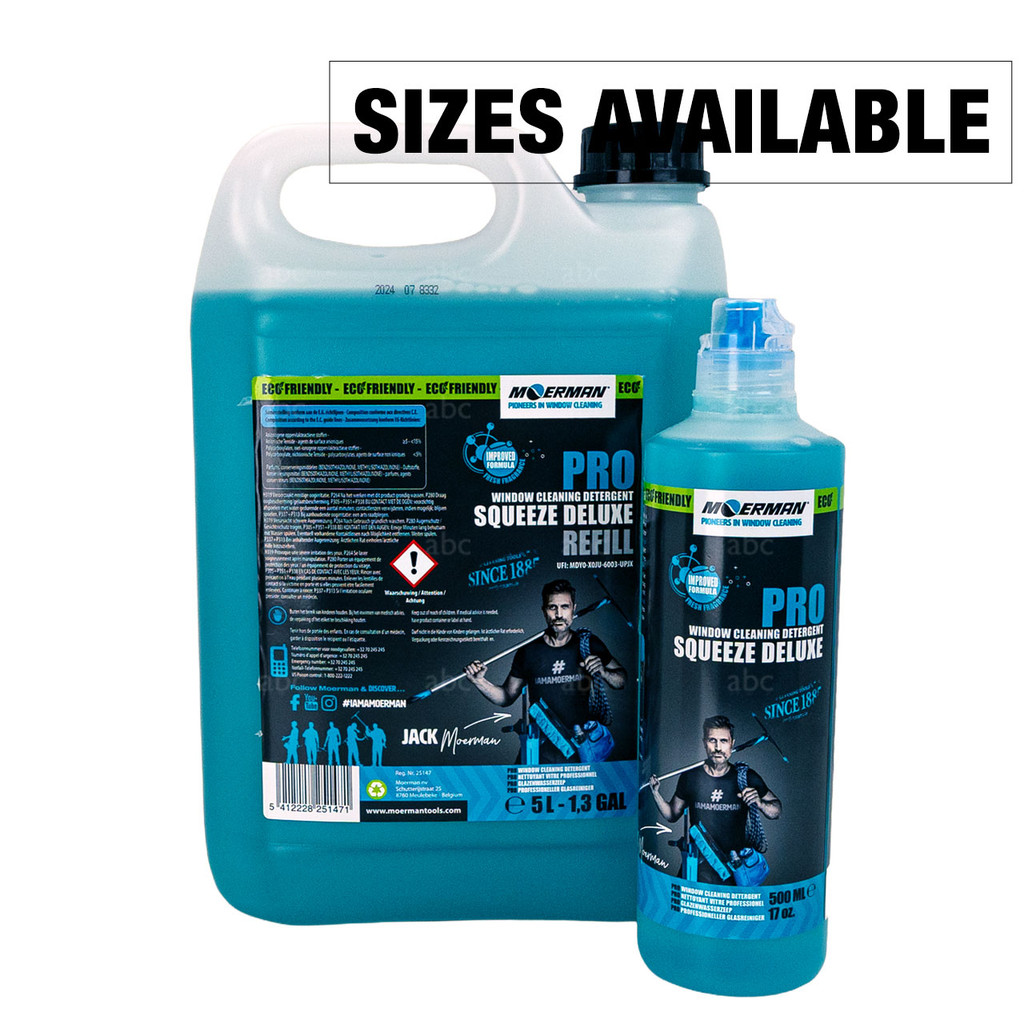
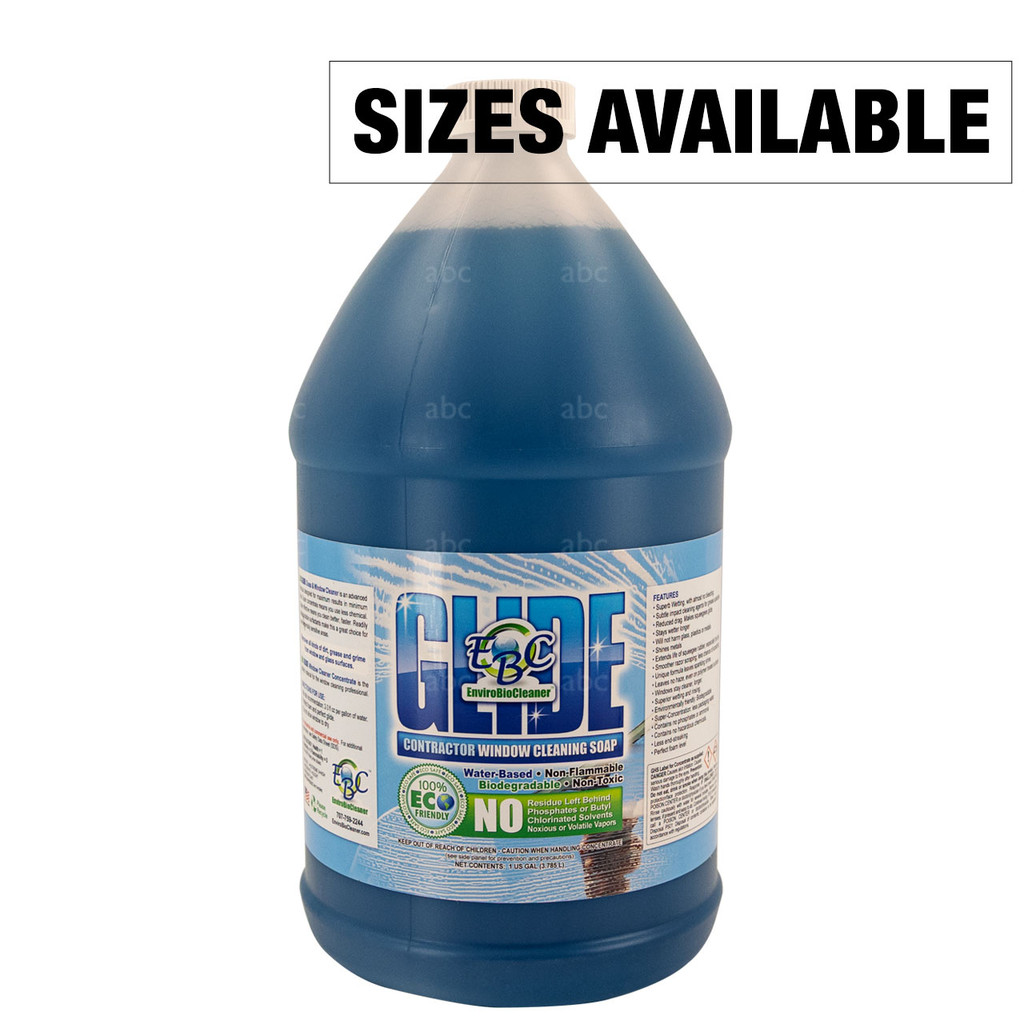
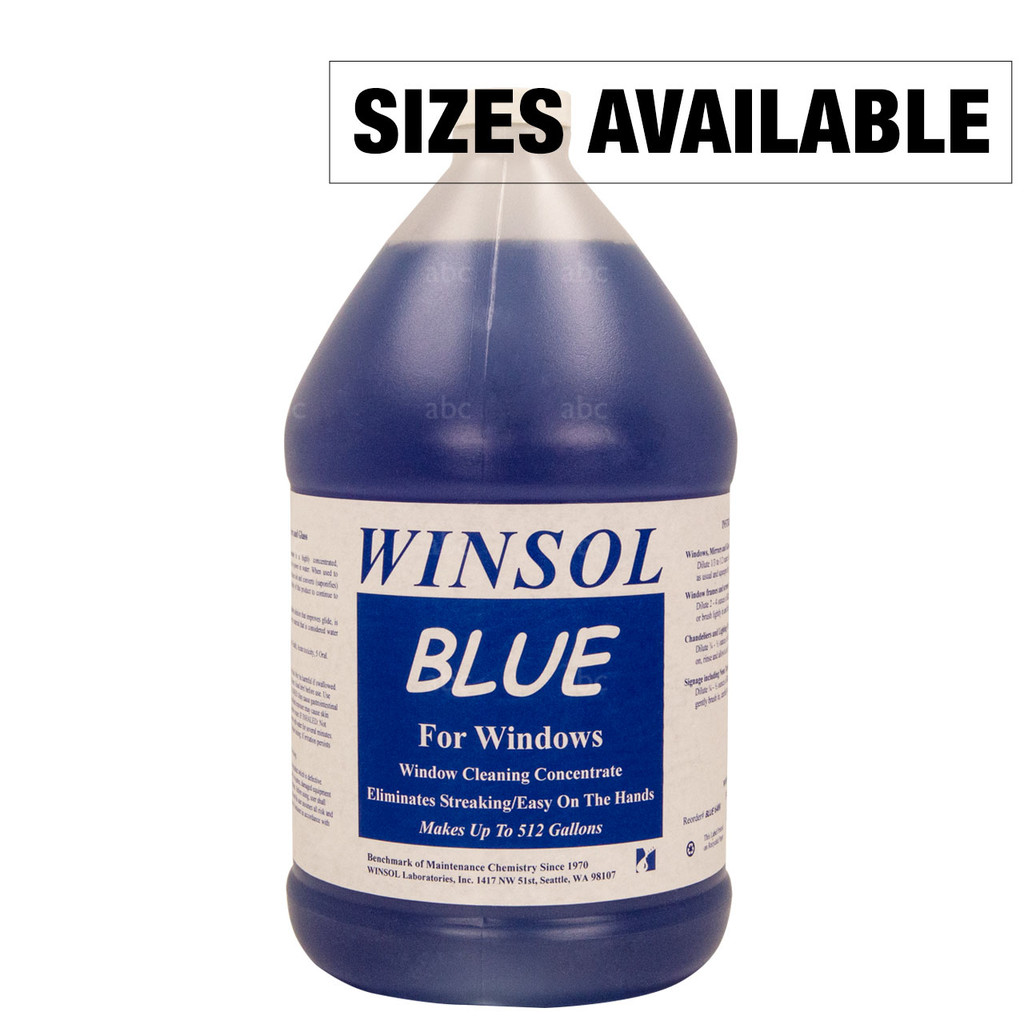
Start with a cleaner suited to your glass and cleaning method, then consider whether you need an additive for extra wetting or squeegee glide. Compare concentrates and wetting agents, follow the product's dilution directions, and check compatibility with coatings, films, and surrounding finishes.
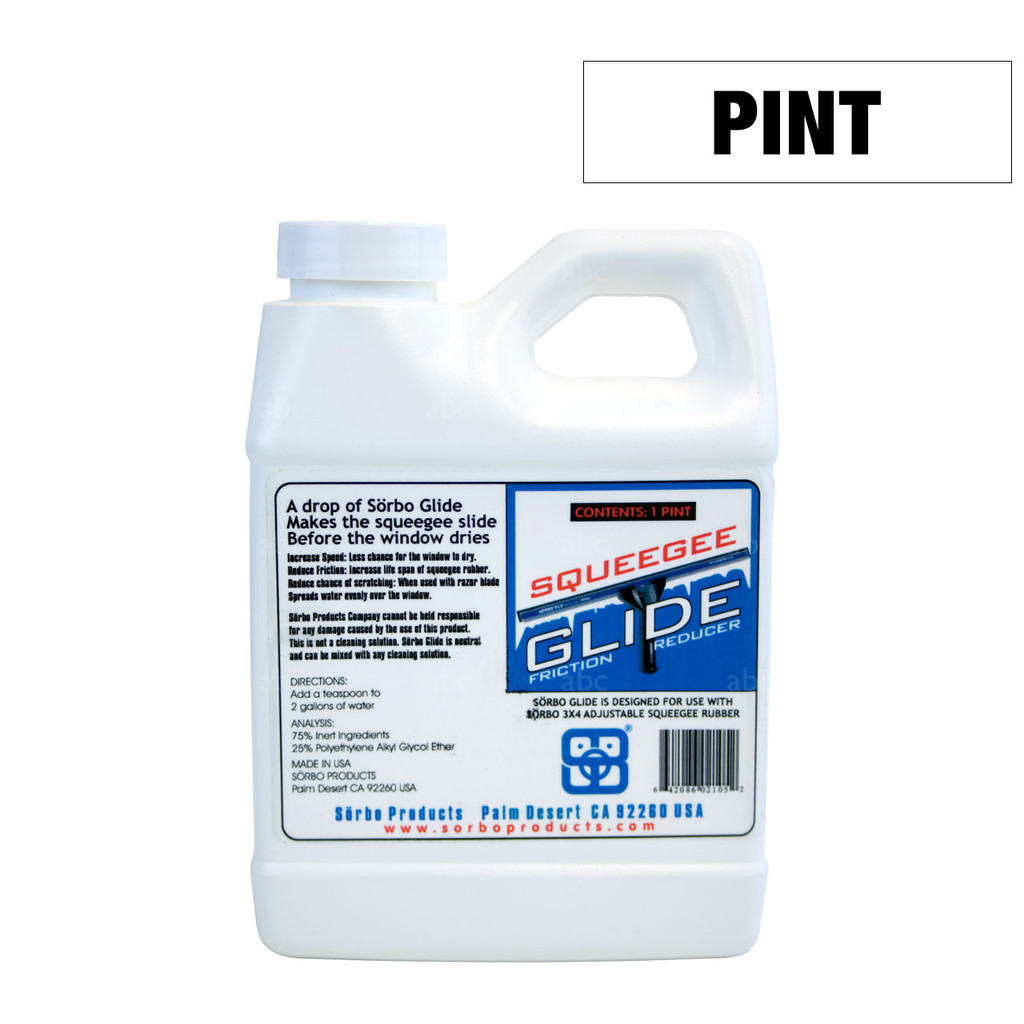
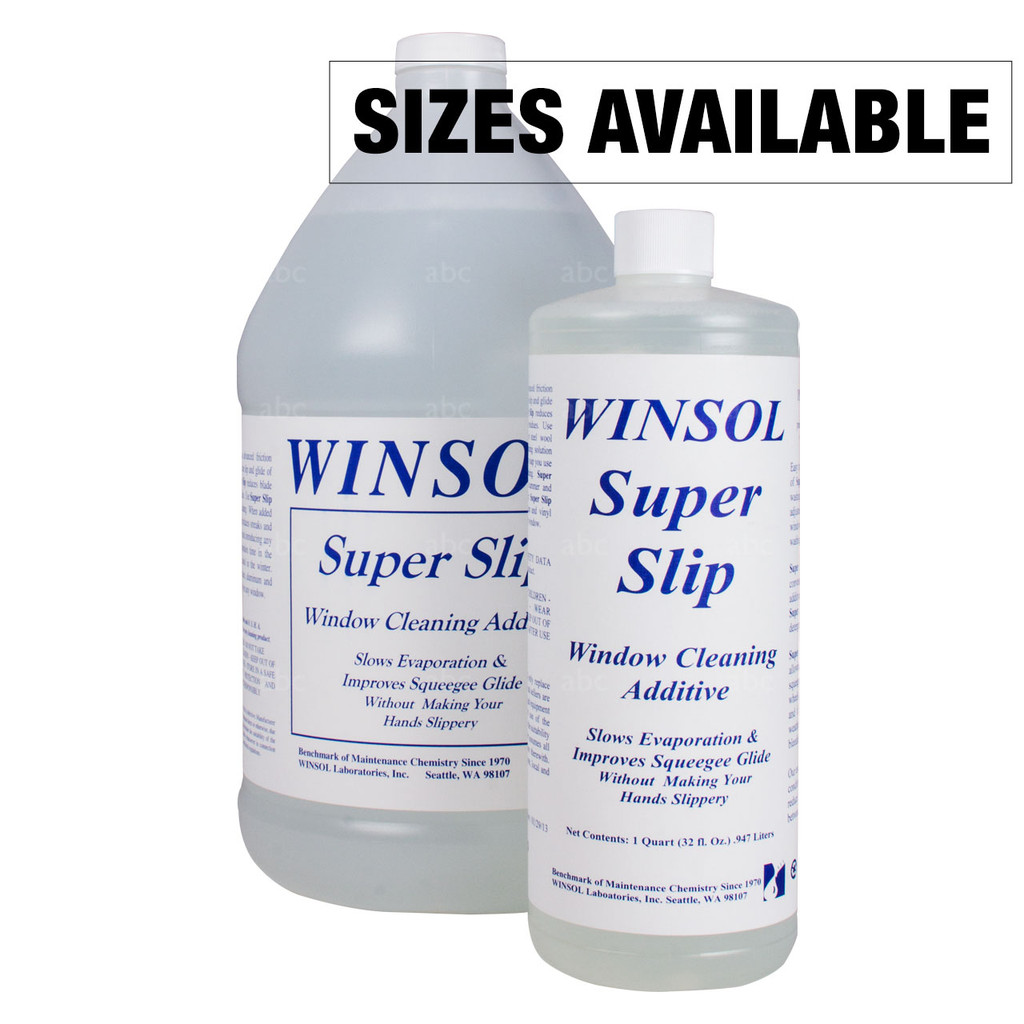
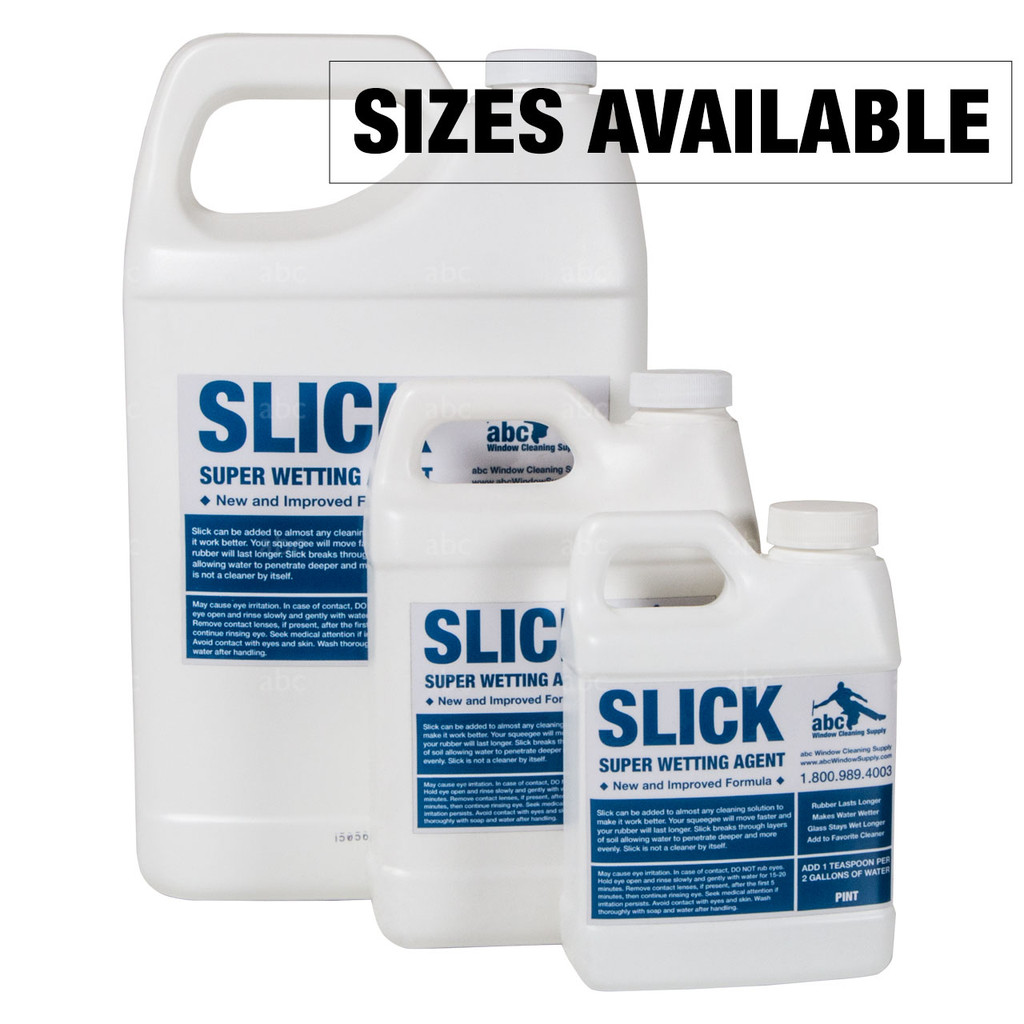
A glass cleaner is formulated to remove soil. A wetting agent helps a solution spread and evaporate more slowly; some are sold as additives to improve glide during traditional window cleaning. These roles can overlap, so check the individual product. abc Slick Wetting Agent is specifically listed as an additive, not a cleaner. It does not replace the cleaning product in your setup.
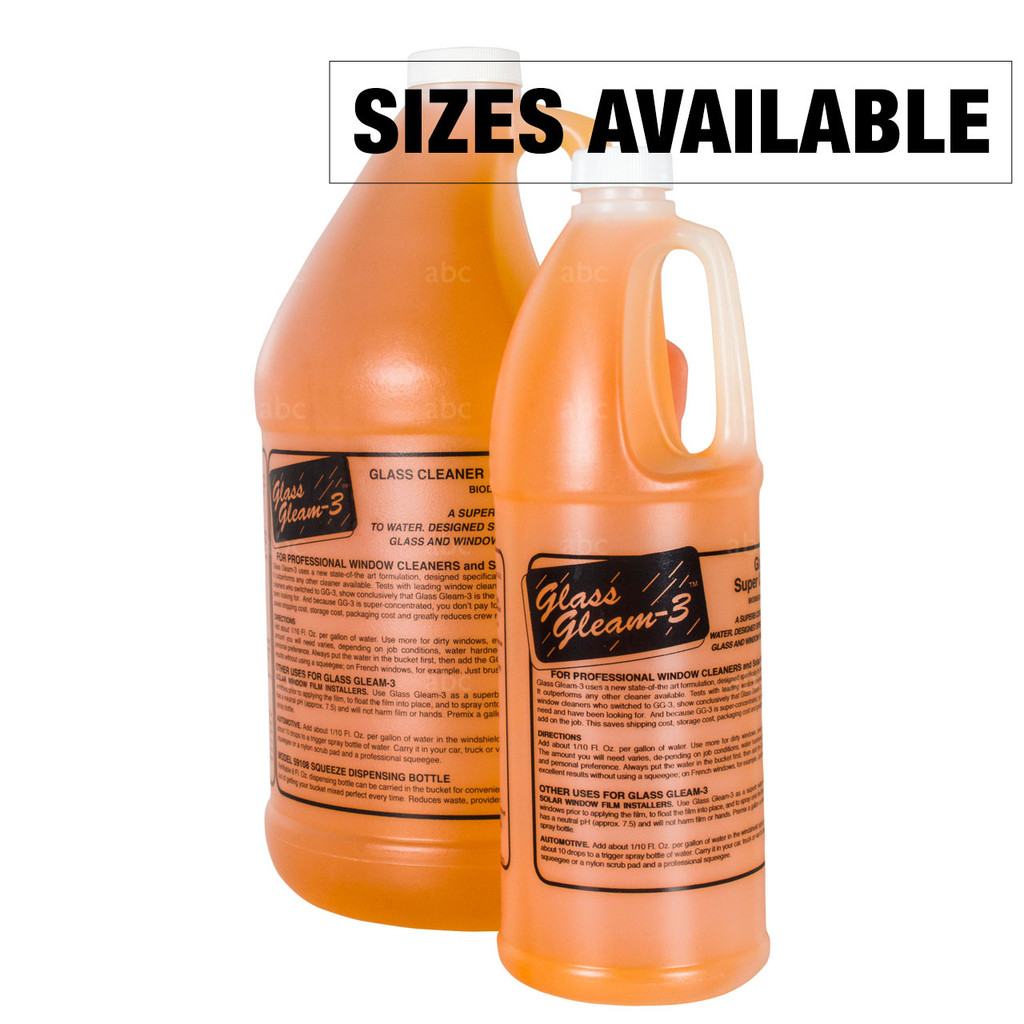
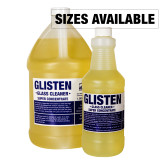
For washer-and-squeegee work, compare abc Glisten and Titan Labs Glass Gleam 4. Both are listed as concentrated glass cleaners with wetting properties and reduced squeegee drag. Compare the application directions, dilution, and surface restrictions rather than choosing by bottle size alone.
Use the directions on the current product label and measure against the amount of water actually in the bucket. A six-gallon bucket holding two gallons of water needs the dose for two gallons, not six. Different concentrates use different doses, so do not transfer a mixing ratio from one product to another. Use a measuring container with suitable markings rather than assuming every capful is the same size.
If your cleaning solution needs additional wetting or glide, compare an additive intended for that purpose. The abc Slick listing describes easier squeegee movement and longer wet time in hot conditions. First check that your cleaner is mixed correctly and your squeegee rubber is clean and in good condition. Follow the additive's directions, and confirm that the products are intended to be used together before combining them.
Check the cleaner's label alongside the glass, film, or coating manufacturer's care instructions. Include nearby frames, seals, and finishes in your compatibility check. A general glass-cleaner description does not establish suitability for every treated surface. Follow application and removal directions, test a small inconspicuous area where permitted, and use the protective equipment specified by the label and safety data sheet.
Mineral deposits may need a separate treatment from routine soil removal. If staining remains after normal cleaning, compare stain, spot, and deposit removers and confirm the product is appropriate for the surface. Increasing the dose of your everyday cleaner is not a substitute for identifying the deposit and choosing a suitable treatment.
Choose a bucket that fits your washer, a washer sleeve and matching T-bar, and a squeegee sized for the glass. Keep the tools and solution clean, and follow the cleaner's directions for removing the solution from the surface.
Need help choosing a cleaner or wetting agent? Call abc at 1-800-989-4003 with the surface, cleaning method, and products you already use.


![abc Chemical Variety Pack - [[sku] | ABC](https://cdn11.bigcommerce.com/s-3ff42/images/stencil/160w/products/3888/24659/SAM-CHEM1__84199.1788451433.jpg?c=2 "abc Chemical Variety Pack - [[sku] | ABC")




![Chemical - Glass Cleaner - Titan Labs - Glass Gleam 3 - (Orange) - [[sku] | Titan Labs](https://cdn11.bigcommerce.com/s-3ff42/images/stencil/160w/products/552/24933/53004-01__13047.1782265731.jpg?c=2 "Chemical - Glass Cleaner - Titan Labs - Glass Gleam 3 - (Orange) - [[sku] | Titan Labs")


![Chemical - Wetting Agent - Sörbo - Glide - Pint - [[sku] | Sörbo](https://cdn11.bigcommerce.com/s-3ff42/images/stencil/160w/products/775/24943/_2105-16__94909.1782265833.jpg?c=2 "Chemical - Wetting Agent - Sörbo - Glide - Pint - [[sku] | Sörbo")